Got a creative block? We can help you!
Photos: ANASTASIIA KRIVENKO, SOFIA ERKKILÄ
Published: 1 June, 2026
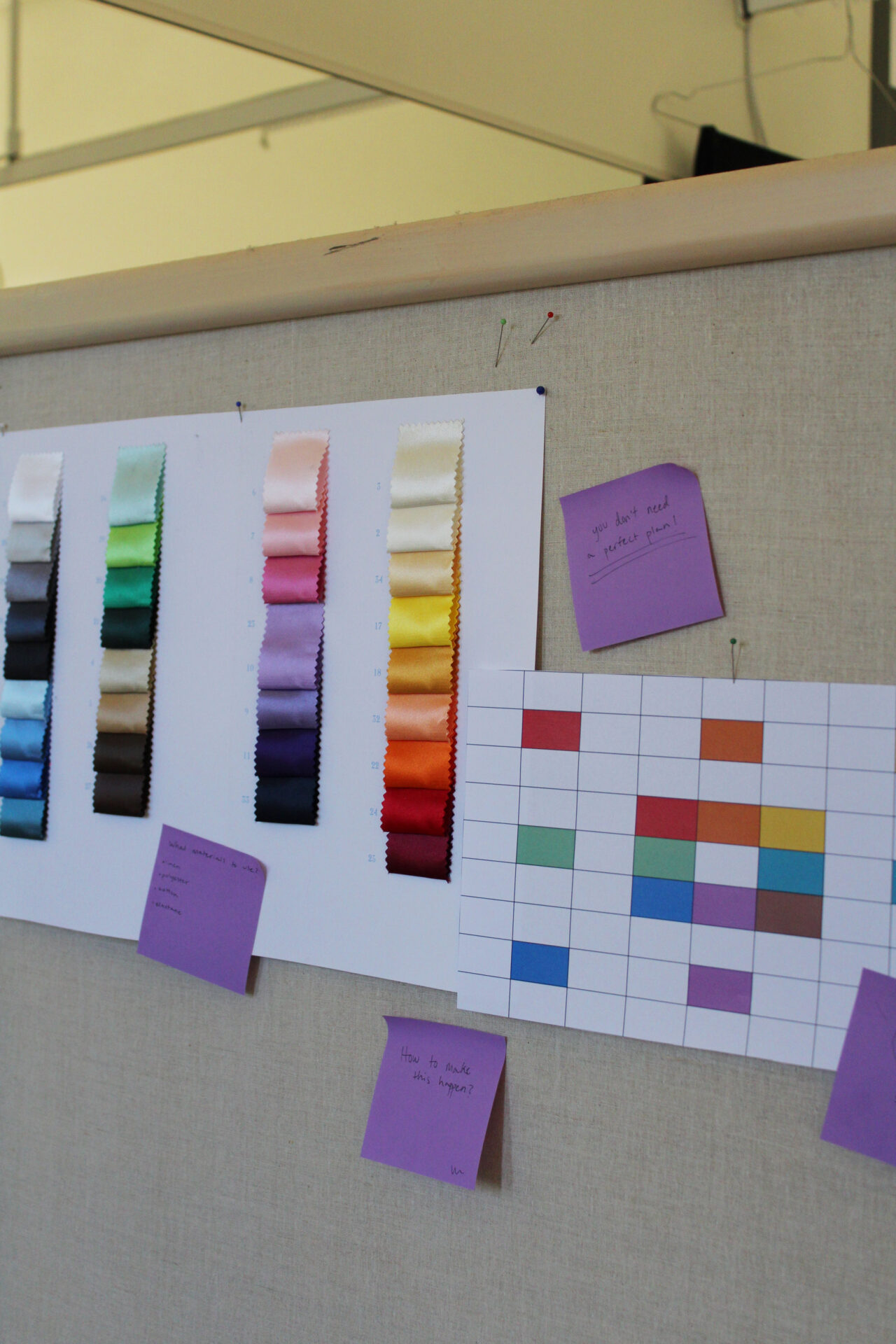
One of the hardest things as a designer is coming up with good ideas. You brainstorm, sketch and stare at a blank page for hours, but still nothing feels right. To help that situation, there are many methods designed to help generate ideas and make the creative process easier.
So, we decided to put some of these design methods to the test, to help you understand how they work in practice. Of course, everyone works differently, so not every technique will suit every person. The key is to experiment and find the tools that work best for you! Here are three design methods we tested and how well they worked for us.
The Lotus Blossom Technique
(Best for general brainstorming and developing ideas further)
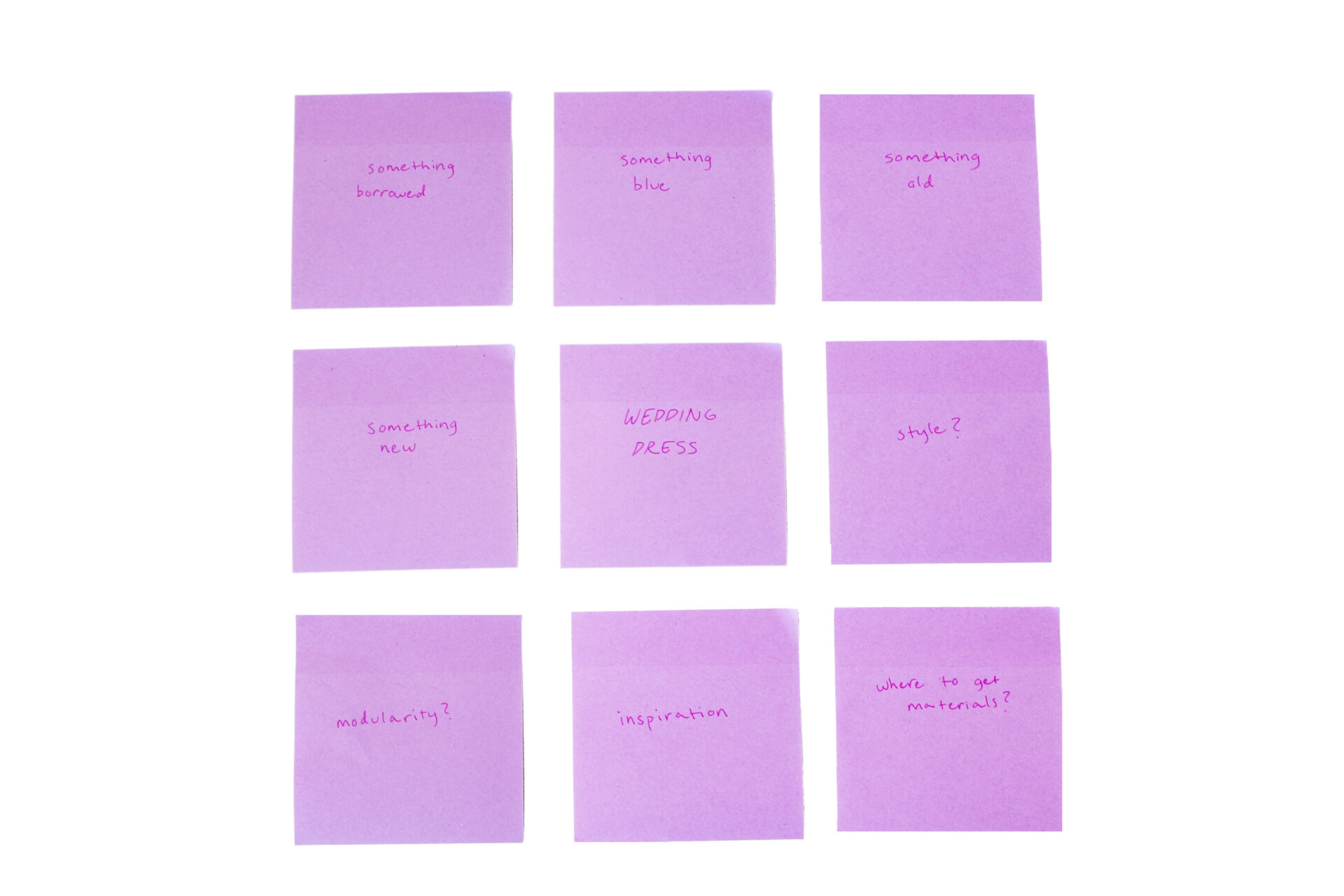
The Lotus Blossom Technique is a structured brainstorming method that helps you expand ideas step by step. You begin with one central idea and branch out from it on a grid. Each of these new ideas can then become its own “center,” creating even more directions to explore.
Here’s an example: your main idea is to create an innovative range of sneakers, and the mind maps around it could include materials, color palettes, comfort, sustainability, streetwear trends, and target audience. These topics can then be further divided into more specific concepts, such as recycled textiles, bold neon colors, ergonomic insoles, or designs inspired by different cultures and styles.
What we liked
This method was particularly helpful when we already had a starting point but needed encouragement to expand the initial idea further. It pushed us to think beyond our first ideas and prevented brainstorming from stopping too early. It was also easier to generate more ideas when concentrating on specific concepts separately. The visual layout also made it easier to see connections between different ideas.
Challenges
At first, this method can feel a little repetitive or overwhelming because there are many boxes to fill. If you are completely stuck and have no starting idea at all, this method may feel difficult in the beginning.
The Lotus Blossom Technique works well for structured thinkers and group brainstorming sessions. It is especially useful when you already have a theme or topic and need help expanding it into stronger concepts.
Rating: 4/5
The Six Thinking Hats Method
(Best for teamwork and seeing problems from different perspectives)
Created by Edward de Bono, the Six Thinking Hats method encourages you to look at ideas from different perspectives. Each "hat" represents a different way of thinking:
White Hat - Facts and information
Red Hat - Emotions and Feelings
Black Hat - Risks and Problems
Yellow Hat - Positives and benefits
Green Hat - Creativity and new ideas
Blue Hat - Organisation and control
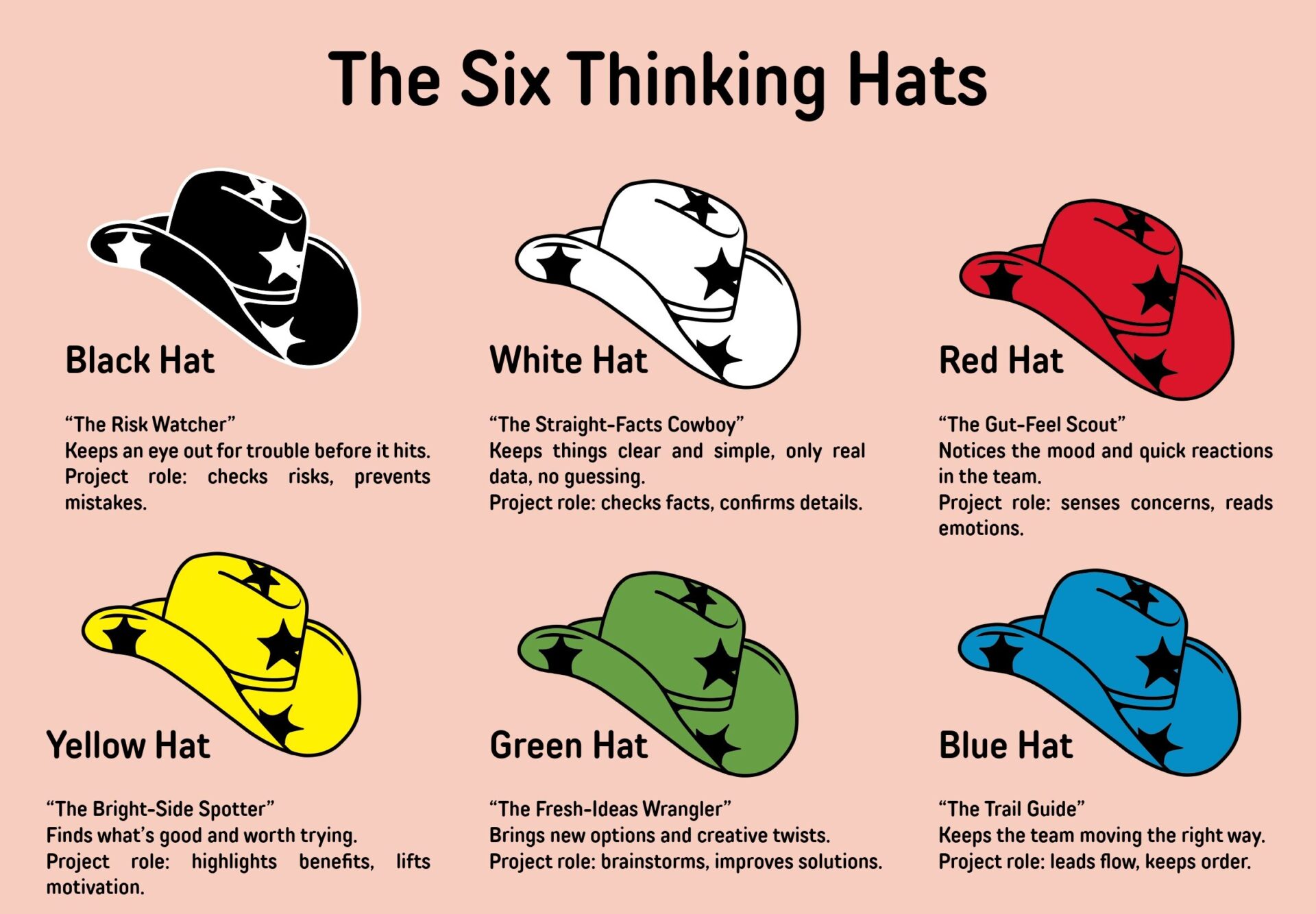
This allows the team to approach one mindset at a time rather than everyone talking about everything at once. For instance, team members may first focus only on possible threats or negatives; afterwards, they shift to thinking about possibilities and creativity.
What we liked
This method worked surprisingly well in a group situation because of the clarity of roles and structure, and it also forced us to think further through ideas instead of immediately dismissing them. Sometimes the “Black Hat” revealed practical issues we had not considered, while the “Green Hat” encouraged more unusual solutions.
Challenges
The method can feel a bit formal or slow, especially for quick brainstorming. It also works better in groups than alone, since discussion is a major part of the process.
Overall, the Six Thinking Hats method is great for larger projects or group assignments. It emphasizes balanced thinking and can help groups work together more effectively, but it may not be the fastest option when you need ideas quickly.
Rating: 3.5/5
Psst! If the Six Thinking Hats method seems too complicated, here's a fun and simple version of it: Disney Creative Strategy.
Named after the great Walt Disney and created by Robert Dilts, this method is very similar to the Six Thinking Hats method. This time, there’s only three “roles” to focus on:
The Dreamer - Gives space for sharing your dreams and wildest ideas without any criticism or judgment.
The Realistic - The idea gets turned into a real plan on how to achieve it.
The Critic - It’s time to critique your ideas and try to see if they have any weak links.
Reverse Brainstorming
(Best for out-of-the-box thinking and refining existing ideas by generating critiques)
Sometimes the traditional way of thinking doesn’t work, and you need something new. Here’s a method that approaches brainstorming a bit differently. Instead of focusing on solving problems, we are creating ways to make things worse. So, if you’re bit of a pessimist, this one is for you!
The idea is very simple. Instead of asking “How can we solve the problem?”, we ask “How do we worsen the problem?” Once you’ve come up with different scenarios, you start creating solutions to the problems you created.
What we liked
The method was a good change for the traditional brainstorming we’re used to. Seeing things from a different perspective helped us create ideas we wouldn’t have thought otherwise. Because of brainstorming backwards, this method also relieved the pressure of finding “the perfect” solution to the problem.
Challenges
Even though the method is fun, brainstorming “the wrong way round” might turn into disaster thinking. This can be harmful to the creative process and slow you down.
Reverse brainstorming is great for analytical thinking and helping to identify blind spots your ideas might have.
Rating: 4/5
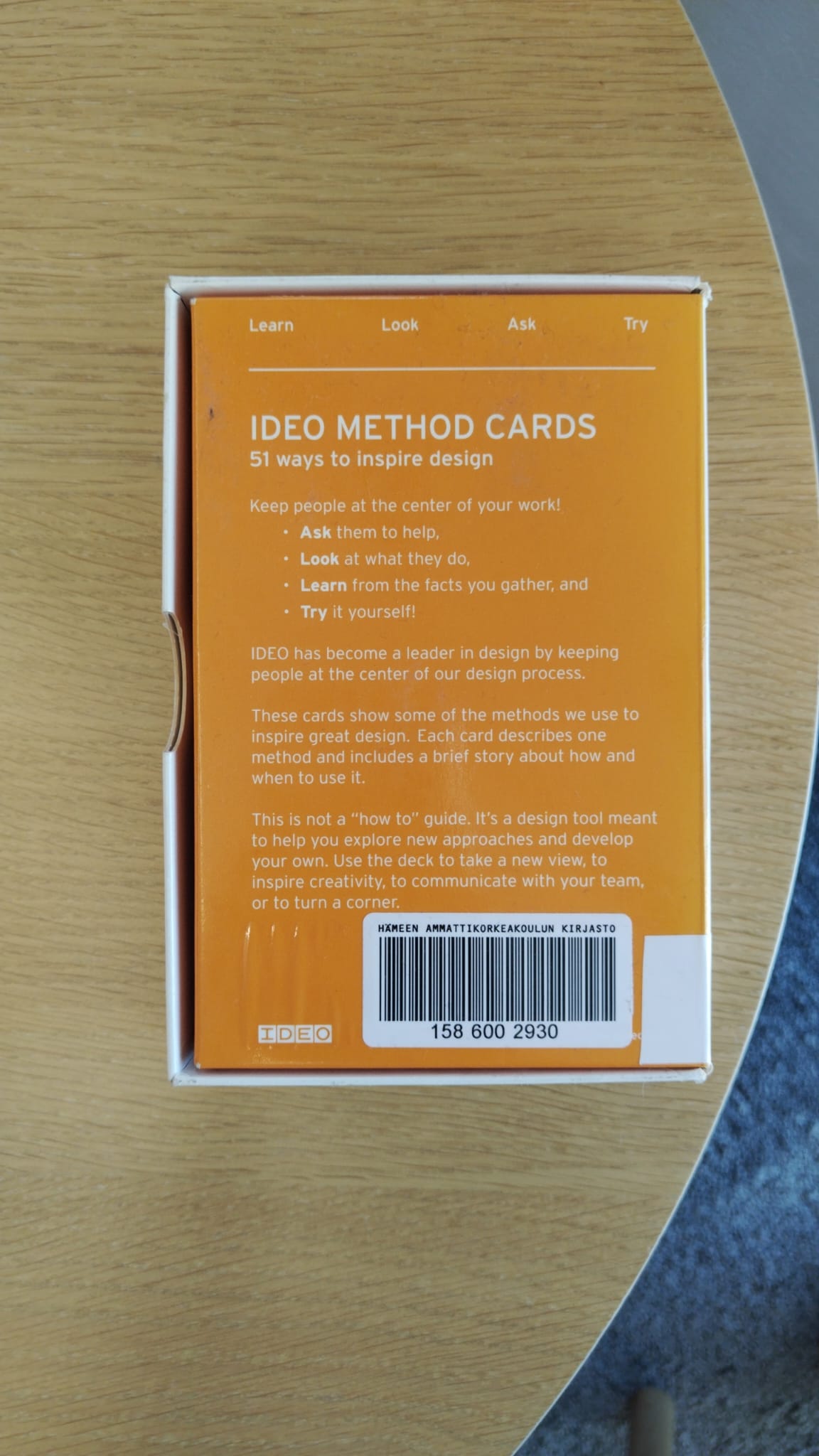
By testing multiple methods, you can find which works for your own individual thinking style and produces the most effective results. Don’t worry if you haven’t found the right one yet because the world is full of different methods to try. One place to look for those is the school library: It’s filled with books about design thinking, so we encourage you to go look through those first!